Road Cycling from Costa Teguise: 5 Routes
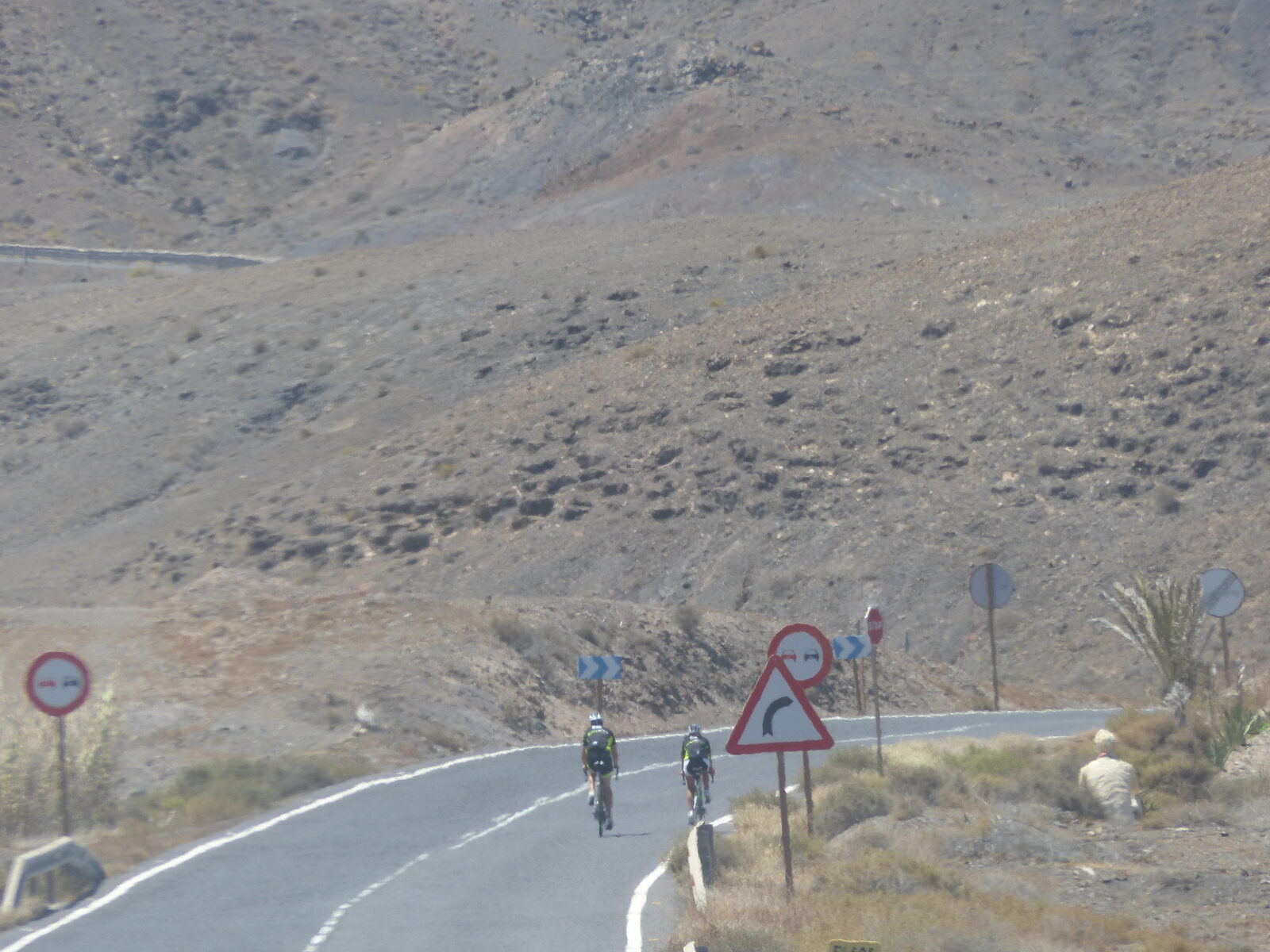
Lanzarote has been a road cyclist’s winter destination for decades. Club La Santa has hosted cyclists every month since the 1980s, the Ironman has been on the calendar since 1992, and the island’s quiet roads, dry weather, and mix of sea-level flats and volcanic climbs make it one of the best places in Europe for a training week. Costa Teguise is one of the best bases for road cycling on the island: you can spin out the door onto empty coastal roads heading north, point south for the Ironman course, or climb straight into the northern mountains within 20 minutes of pedalling.
This guide covers five road cycling routes from Costa Teguise, from a flat recovery spin to a 140 km Ironman sampler. Distances and elevation are measured from the centre of Costa Teguise via Google Maps cycling directions, and each map below shows the full route so you can see the exact line from the villa.
Why is Costa Teguise good for road cycling?
Three reasons. First, location. Costa Teguise sits on the LZ-1 coastal road, which runs almost traffic-free north to Arrieta and Orzola. Head south on the same road and you reach Arrecife and the Ironman course through Tias and Puerto del Carmen. The interior of the island is 10 minutes away by bike through Teguise town. You are not boxed in.
Second, the climbs start within a few kilometres of the front door. Tabayesco, the island’s longest climb, is a 20 km warm-up ride away. The road up to Teguise town gets you 200 vertical metres before you have left the Costa Teguise municipality. Femes, the steepest climb, is further out, but reachable on a proper day in the saddle.
Third, the logistics are easy. Spar supermarket is 3 minutes on foot for ride food, electrolytes, and a shot of coffee before you roll out. The airport is 15 minutes by car when you land with your bike box. Parking at the villa is at the doorstep, so loading the car for rides that start elsewhere is quick.
Route 1: Orzola coastal flat (easy, ~50 km)
The recovery ride. Roll out of Costa Teguise onto the LZ-1 heading north. The road skirts the coast through Guatiza, Mala, and Arrieta, all the way up to Orzola at the top of the island. One-way is around 25 km of good tarmac, gentle gradient (a few low rollers, nothing sustained), with the Atlantic on your right the whole way.
Orzola is the ferry port for La Graciosa. Stop for a coffee and a tortilla at one of the harbour bars, then roll back the way you came. Round trip from Costa Teguise is around 50 km with under 150 metres of climbing, so almost completely flat.
Best for: recovery days, first ride of the trip, riders getting used to the wind. The return leg is usually into a headwind from the north in the afternoon, so either leave early or enjoy the tailwind on the way out and accept the grind home.
Route 2: Famara and the western coast loop (~65 km, 600 m)
Head inland from Costa Teguise up to Teguise town (10 minutes by bike, 180 metres of climbing, enough to wake the legs up). Drop out of Teguise on the LZ-30 and LZ-402 to Soo, then continue to Caleta de Famara on the northwest coast. This section is flat and fast, often with the trade wind pushing you from behind.
Famara is the surfing and kitesurfing capital of Lanzarote, set under the Risco de Famara cliffs that rise above the beach and dominate the horizon for the entire ride, reaching 671 metres at Penas del Chache, the island’s highest point. Grab a drink, turn around, and return via Tiagua and Tahiche to Costa Teguise. Around 65 km with 600 metres of climbing.
Best for: riders who want a mix of climbing and fast flats. The Famara cliffs are one of the most dramatic views on the island. If you are planning trail running later in the week, this is a good recce for the Famara Total Trail course.
Route 3: La Geria wine country loop (~80 km, 750 m)
The south is where Lanzarote stops looking like the Atlantic and starts looking like the moon. Head out of Costa Teguise through Tahiche and Mozaga, then drop into La Geria on the LZ-30. This is the volcanic wine region where vines grow in individual stone-walled pits in black lapilli gravel, one of the strangest agricultural landscapes in Europe.
The road gently climbs through the vineyards, past dozens of bodegas, before topping out near Uga. From Uga, roll down to Yaiza and loop back via Tias and the coast to Arrecife, then north to Costa Teguise. About 80 km with 750 metres of climbing.
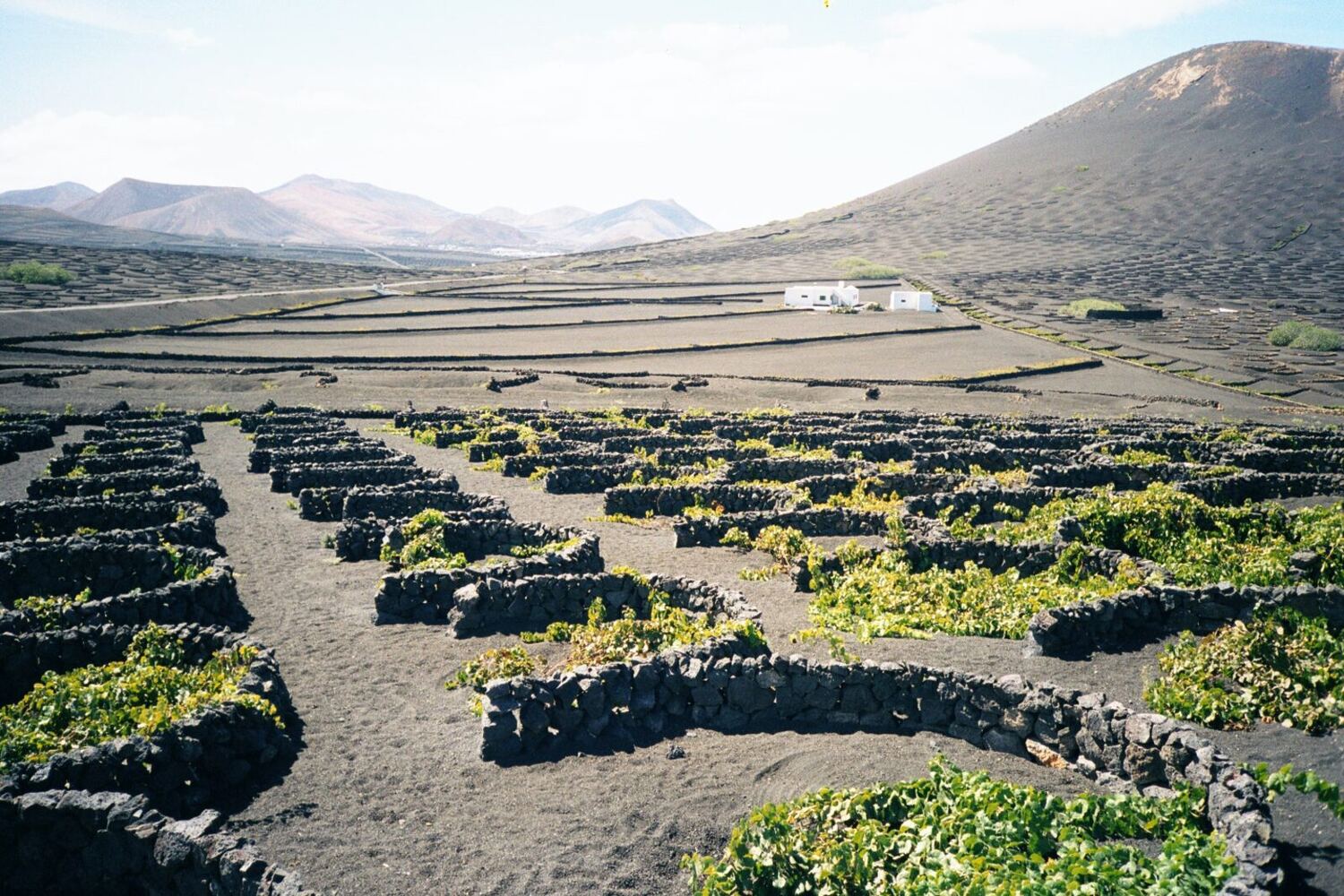
Best for: a full day ride with steady climbing, photo stops, and a wine tasting at the turnaround if you are not racing anything that week. This is also the area the Wine Run Lanzarote and the Ironman bike course both cut through.
Route 4: The Tabayesco and Mirador del Rio king stage (~70 km, 1,100 m)
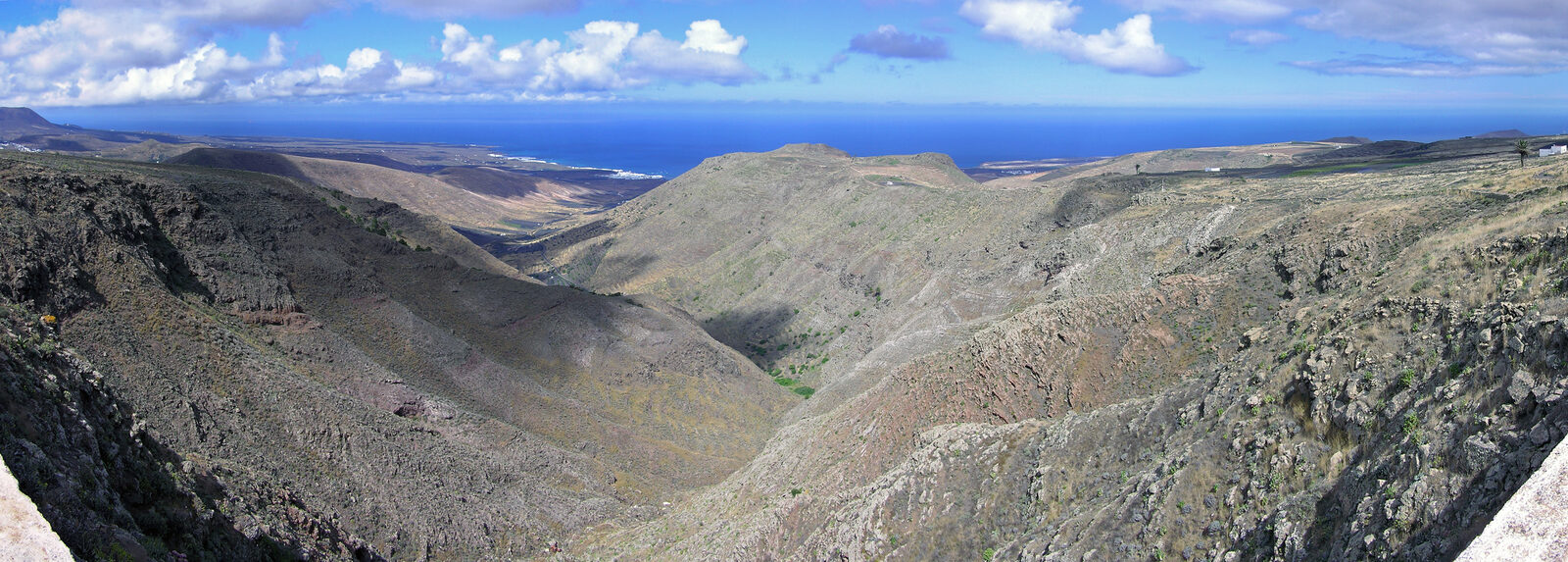
The hardest ride of the five, and the best view in Lanzarote at the top. Roll out north on the LZ-1 through Guatiza, Mala, and on to Arrieta. At Arrieta, turn left onto the LZ-207 and start climbing the Tabayesco. This is the longest climb on the island: 9.6 km at an average of 5.5%, with a few ramps that hit 10% in the middle. The road is a narrow valley lane with almost zero traffic. Goats, stone walls, rural Lanzarote at its quietest.
One thing to know about the LZ-207: shortly before the top, where the road meets the LZ-10 near the Mirador de Haria, there are a few big concrete barriers across the tarmac. You will have to slow down, weave through, or briefly dismount. It catches riders out once, not twice.
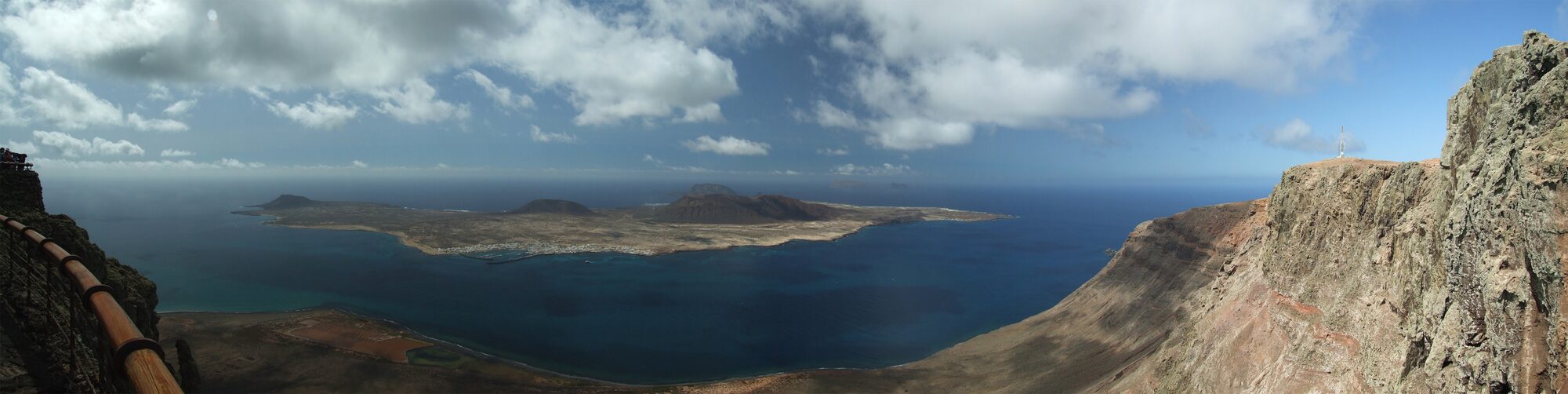
At the top of Tabayesco you join the LZ-10 at the Mirador de Haria. Turn right and roll down into Haria itself, the prettiest village on the island, palm trees and whitewashed houses. From Haria, the road climbs again (gentler this time) up to Mirador del Rio, the clifftop viewpoint designed by Cesar Manrique. At 475 metres above sea level, the entire island of La Graciosa sits below you across the strait. This is the view the locals send tourists to see, and you earned it the hard way.
From Mirador del Rio, the descent is the reward. Drop down the hairpins to Ye, then continue down to Orzola at sea level, then back along the coastal LZ-1 to Costa Teguise. Around 70 km with 1,100 metres of climbing total. It is not the longest day of the week, but almost all the climbing is concentrated between Arrieta and Mirador del Rio, so it feels bigger than the number suggests.
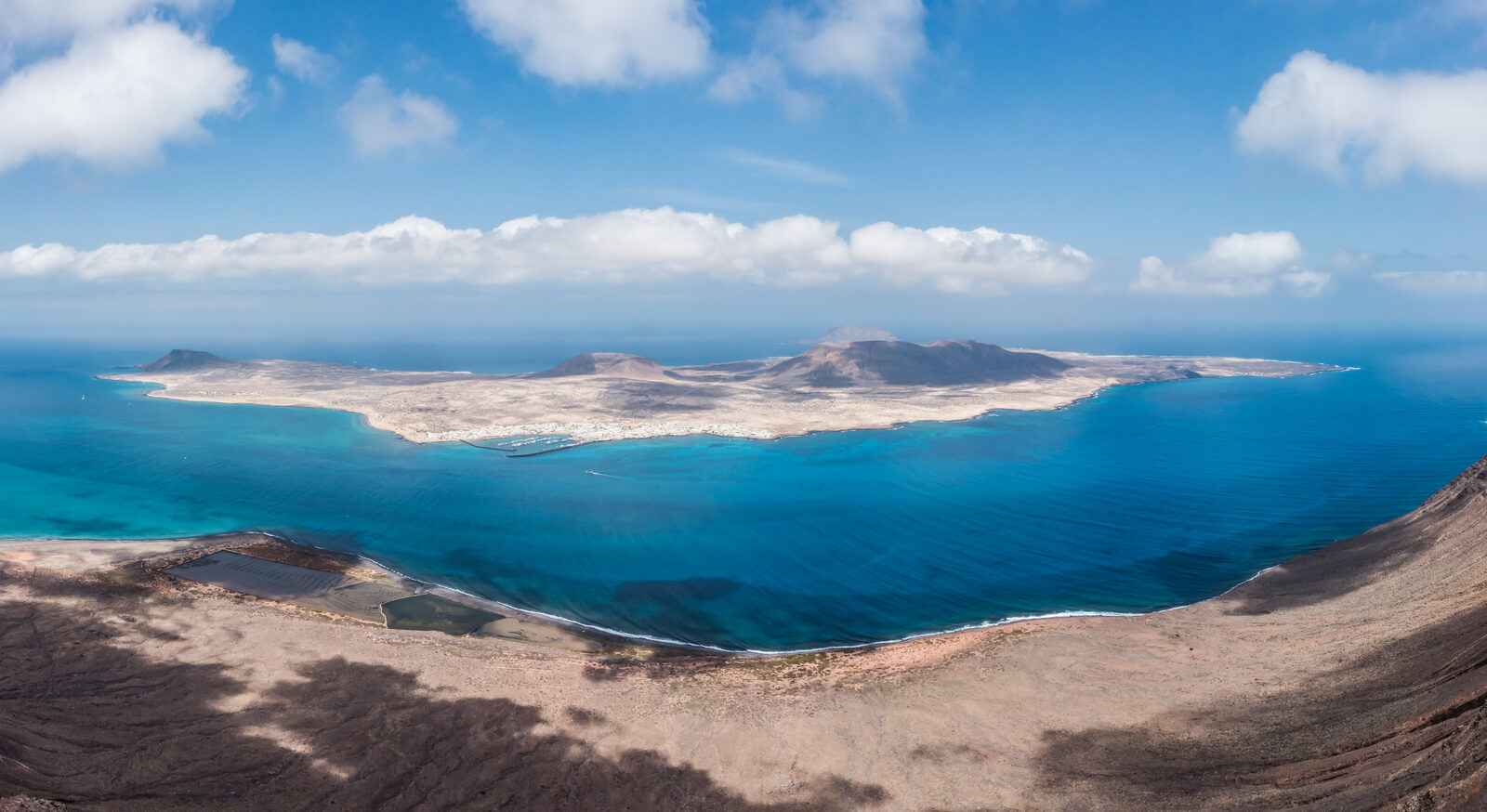
The Tabayesco climb has been a Strava segment for years. If you want to check your time against other riders, the Tabayesco Strava segment has tens of thousands of attempts logged by cyclists from around the world.
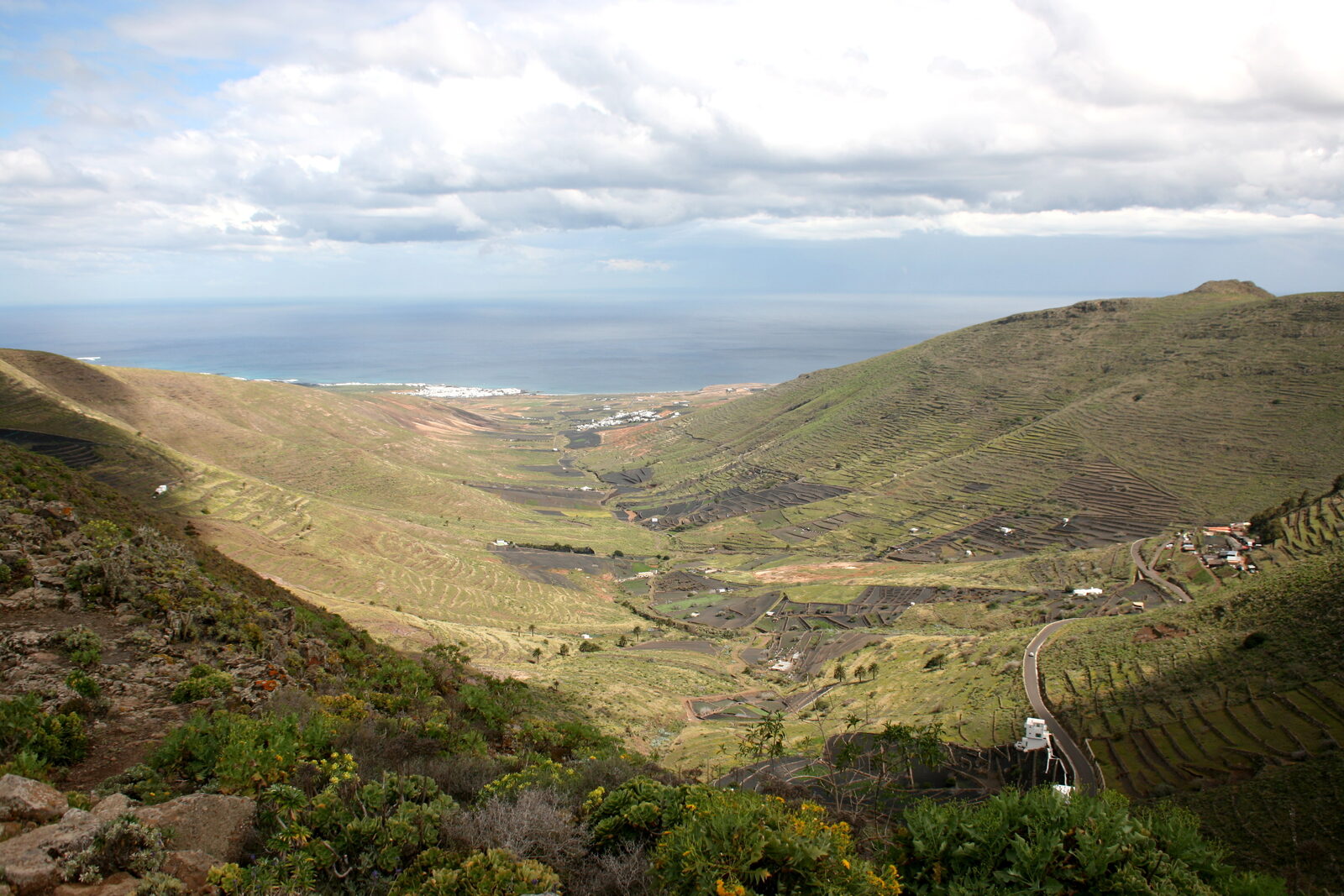
Best for: fit riders, Ironman training, anyone chasing a single big day. Start early (before 09:00) to beat the heat on the climb, carry two bottles, and eat before you start climbing. There is a cafe at Haria and another at Mirador del Rio itself for a mid-ride top-up.
Route 5: Ironman bike course sampler via Femes and El Golfo (~140 km, 1,400 m)
For riders preparing for Ironman Lanzarote or anyone who wants a full day covering the famous climbs of the south. This is not the full 180 km Ironman course, but it takes in Puerto del Carmen, Playa Blanca, the Femes climb, El Golfo, and the La Geria vineyards, which is most of the back half of the Ironman bike leg.
Roll south from Costa Teguise through Arrecife and Tias to Puerto del Carmen, where the Ironman bike course officially starts. From there, continue south along the coast through Playa Blanca at the bottom of the island. The Femes climb begins at the Papagayo roundabout north of Playa Blanca: 5.6 km at an average of 6%, with the last kilometre ramping up past 15% gradient on the final hairpins. This is where Ironman dreams are sometimes broken.
From the top of Femes, descend back toward the coast and head north to El Golfo, the green lagoon village on the western shore, then cut inland across the La Geria volcanic vineyards and return to Costa Teguise via Tias and Tahiche. Around 140 km with 1,400 metres of climbing. Expect a strong northerly headwind all the way back from El Golfo, which is the real reason the Ironman course is considered one of the hardest on the calendar. The full Ironman bike course climbs more than 2,500 metres over 180 km, so this is still a sampler rather than a full simulation, but it covers the defining sections.
Best for: Ironman training, riders chasing Femes as a Strava goal, anyone who wants to say they have ridden the south end of the island. Carry plenty of water and food, there are fewer cafes once you cross into the south and El Golfo itself only has a handful.
If you want the full route data, cyclinglocations.com has the Ironman Lanzarote bike course with GPX. Epic Road Rides has detailed guides for most of the major Lanzarote loops with downloadable files. Komoot’s Top 10 Lanzarote road routes is another good starting point for route planning.
What gear do I need for road cycling in Lanzarote?
The bike: Any modern road bike handles Lanzarote fine. The roads are generally in good condition, especially the main routes. A compact or sub-compact chainset makes Tabayesco and Femes noticeably more enjoyable. If you are bringing your own bike, budget airlines to Lanzarote airport (ACE) accept bike boxes with a surcharge.
Clothing: Jersey, shorts, arm sleeves, and a rain jacket or gilet for the descents. Mornings in the north can be cool (12-15C in winter), and the descent from Mirador del Rio is fast and windy. Summer mid-day rides demand factor 50 sunscreen on every exposed surface.
Tyres: 25 or 28 mm is standard. The road surfaces are mostly smooth but a wider tyre gives you comfort on longer days. Tubeless helps if you want to avoid mid-ride flats, but tubes are fine too.
Hydration and food: Two bottles minimum for any ride over 40 km. In summer, fill both and plan cafe stops. There are cafes in Haria, Mirador del Rio, Teguise, Famara, Yaiza, and Uga, but long stretches of road between them have nothing.
Lights: Not needed if you ride in daylight, which you should. Lanzarote roads at night have minimal lighting and the wind makes dark rides unpleasant.
Where should I stay for a road cycling week in Lanzarote?
Costa Teguise is one of the best bases for road cycling in Lanzarote. You have direct access to the coastal LZ-1 north and south, the inland climbs through Teguise town, and you are 20 minutes by car from both the Ironman start in Puerto del Carmen and the Famara loop start. The airport is 15 minutes away for bike box logistics.
Casa Los Alisios has a dedicated lockable storage room where your road bikes live safely between rides. Parking is at the front door, so loading bikes into a car for rides that start elsewhere is three minutes of work, not twenty. The villa is single level, which matters more than you would think after a 140 km day with 1,400 metres of climbing: you do not want to carry a bike up stairs at that point.
The full kitchen handles the nutrition side: pasta the night before, oats and eggs in the morning, recovery food after. Spar is a 3 minute walk for last-minute supplies. The 1 Gb WiFi with ethernet backhaul uploads your ride data and lets you join Zwift sessions or a coaching call on rest afternoons. Three bedrooms and a slide-out double sleep up to 6, so the whole riding group fits under one roof, which is how training camps usually work.
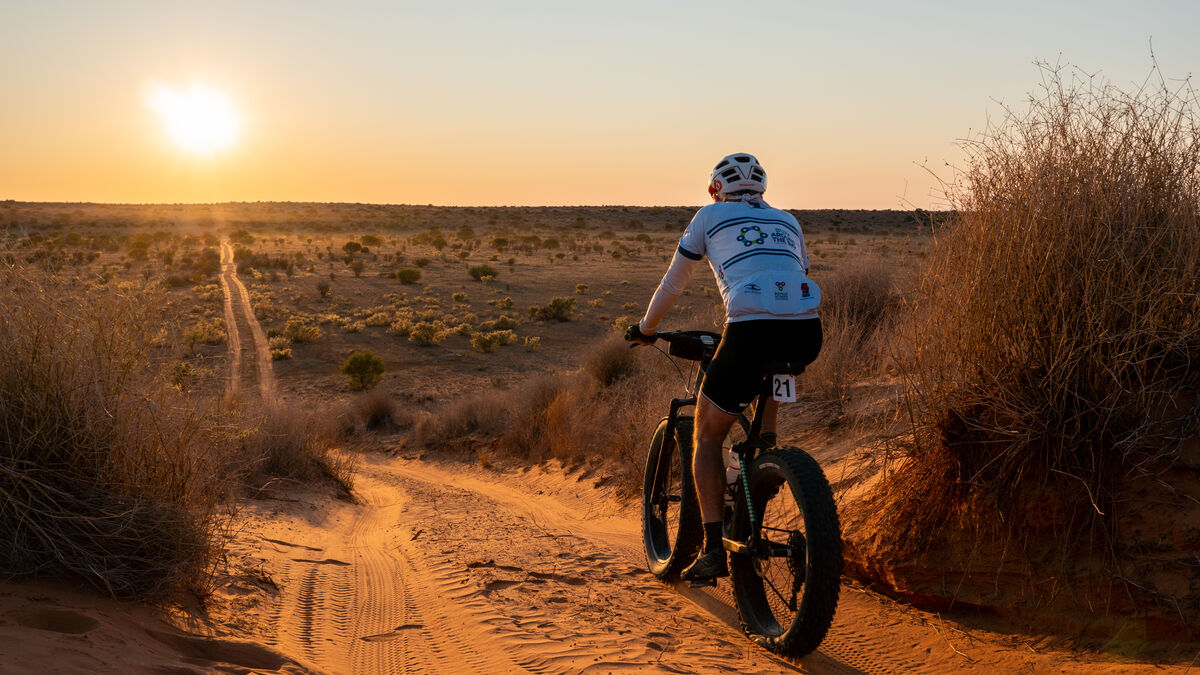
For recovery days, Playa El Ancla is 10 minutes on foot from the villa for a cold sea swim, one of the simplest forms of active recovery for tired legs. The Timanfaya National Park is a good half-day car trip on a non-riding day if the wind is brutal, and the Famara Total Trail route overlaps with some of the riding loops if you are combining running and cycling. If your training week lands in Ironman season, the Ironman Lanzarote accommodation guide covers logistics for race week specifically. And if you prefer fat tyres to skinny, the mountain biking in Lanzarote guide covers the trail side of the island.
When is the best time for road cycling in Lanzarote?
November to March is peak cycling season. Temperatures sit between 18-22C, wind is lighter than summer, rain is rare. This is when Club La Santa and most European training camps run.
April to May is warm and dry, with the Ironman in late May bringing thousands of triathletes to the island. The roads get busier with pros and age-groupers pre-riding the course.
June to September is hot (26-30C) and windy. Early starts are essential. Afternoon riding in summer is brutal on the exposed sections.
October is a good shoulder month, especially early October when the Vuelta Ciclista a Lanzarote takes over the island for a weekend of non-competitive riding.
Whatever week you pick, check the wind forecast before you choose your route direction. North in the morning, south in the afternoon is a good rule if the trade wind is blowing, which it usually is.
Frequently Asked Questions
- Is Lanzarote good for road cycling?
- Yes. Lanzarote has quiet roads, minimal rain, steady winds for training resistance, and a mix of coastal flats and serious climbs like Tabayesco (10 km) and Femes. [Club La Santa](https://www.clublasanta.com/) and the Ironman bring thousands of cyclists to the island every spring.
- Where is the best base for road cycling in Lanzarote?
- Costa Teguise sits on the northeast coast, giving direct access to the flat LZ-1 coastal road north to Orzola, the Tabayesco and Haria climbs to the north, Famara to the northwest, and La Geria vineyards to the south. The Ironman bike course passes within 20 km.
- What is the hardest climb in Lanzarote?
- Femes from Playa Blanca is the steepest, with the final kilometre ramping over 15%. Tabayesco is the longest at 9.6 km averaging 5.5%. The ride from sea level up to Mirador del Rio via Haria racks up the most vertical in a single sitting.
- Can I rent a road bike in Costa Teguise?
- Yes. Several shops in Costa Teguise and Puerto del Carmen rent road bikes, including carbon race bikes and entry-level aluminium. Book ahead in Ironman week and around Club La Santa peak weeks.
- Is there secure bike storage at Casa Los Alisios?
- Yes. The villa has a dedicated lockable storage room for road bikes, with parking at the front door for loading. Single-level layout means no stairs to carry bikes up or down after a long ride.
Planning your trip? Book Casa Los Alisios