Timanfaya National Park, Lanzarote
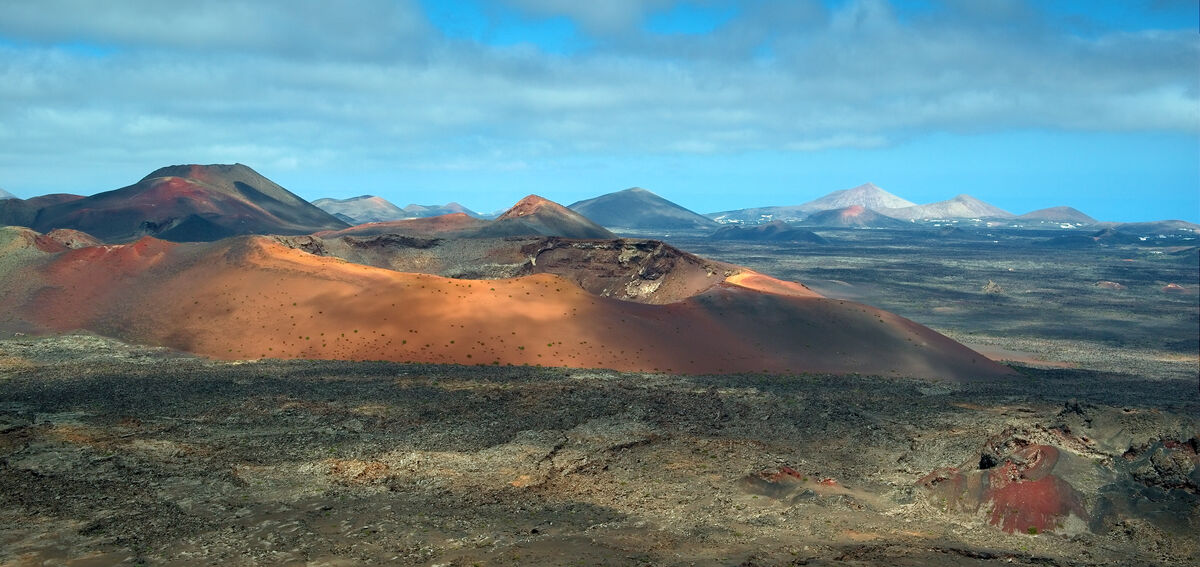
Timanfaya National Park is the most visited attraction in Lanzarote and one of the most unusual landscapes in Europe. The park covers 51 km² of volcanic terrain created by eruptions that lasted six years, from 1730 to 1736. More than 100 volcanoes sit within the park boundaries. The ground is still hot enough to turn water into steam, ignite dry branches, and cook food without any fuel. This is not a museum. The volcano is still active beneath your feet.
From Casa Los Alisios in Costa Teguise, Timanfaya is about 30 minutes by car. It is the kind of day trip that stays with you long after you leave the island.
What happened at Timanfaya?
On September 1, 1730, the earth split open in what is now the southwest of Lanzarote. Lava poured from more than 100 volcanic vents over the next six years, covering roughly 200 km² of land. That is about one quarter of the entire island. Eleven villages were buried, including Chimanfaya (the settlement that gave the park its name), Santa Catalina, and Maretas. Farmland that had fed the island for generations disappeared under metres of molten rock.
A second, shorter series of eruptions hit in 1824, adding the volcanic cones of Tao, Chinero, and Tinguaton to the landscape. The combined result is the raw, barren terrain you see today: twisted lava fields, ash plains, and craters in every direction with almost no vegetation.
The area became a national park on August 9, 1974, making it the only national park in Spain that is entirely geological. There are no forests, no rivers, no green valleys. Just rock, heat, and silence.
What do you see on the Timanfaya bus tour?
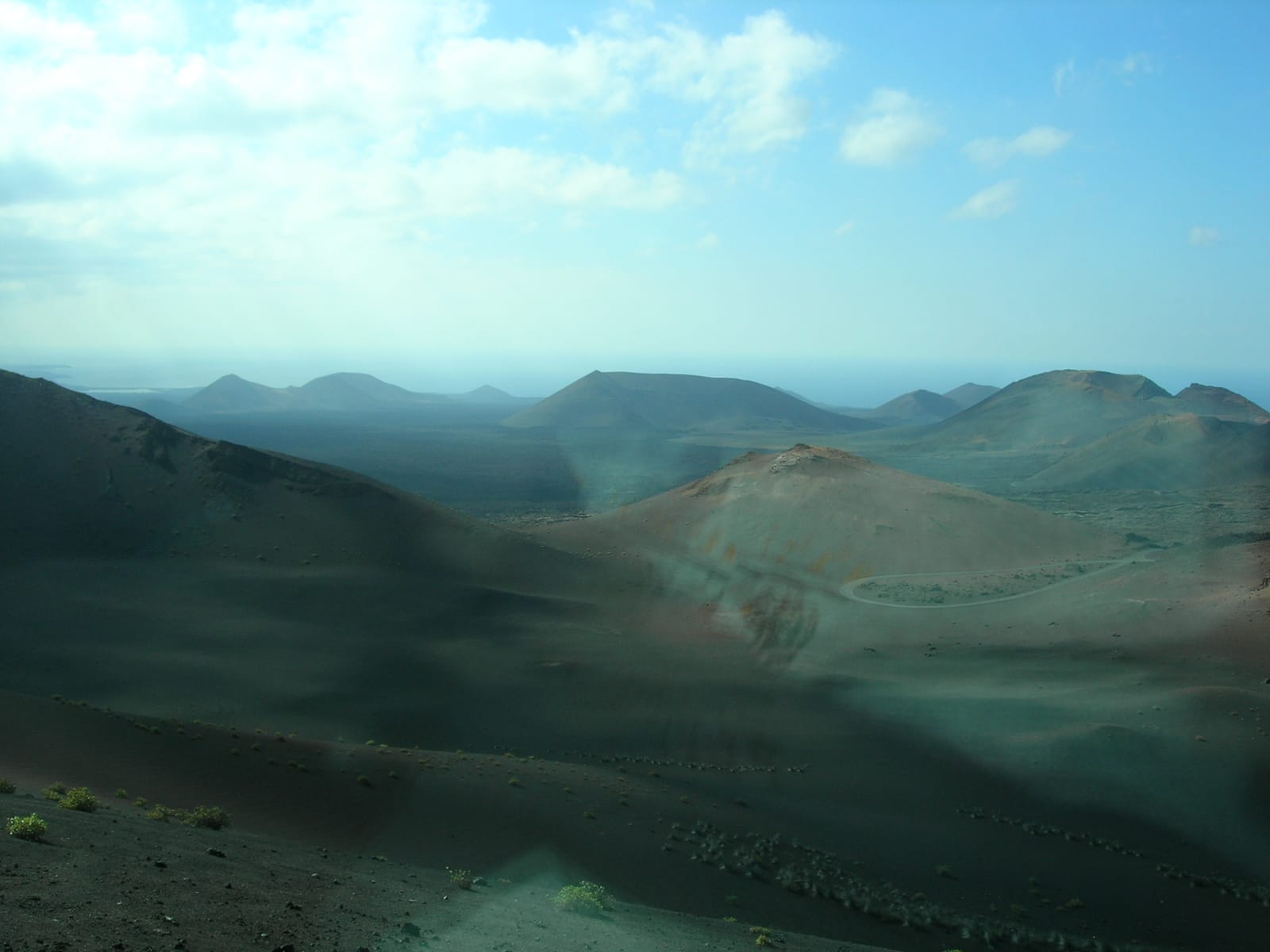
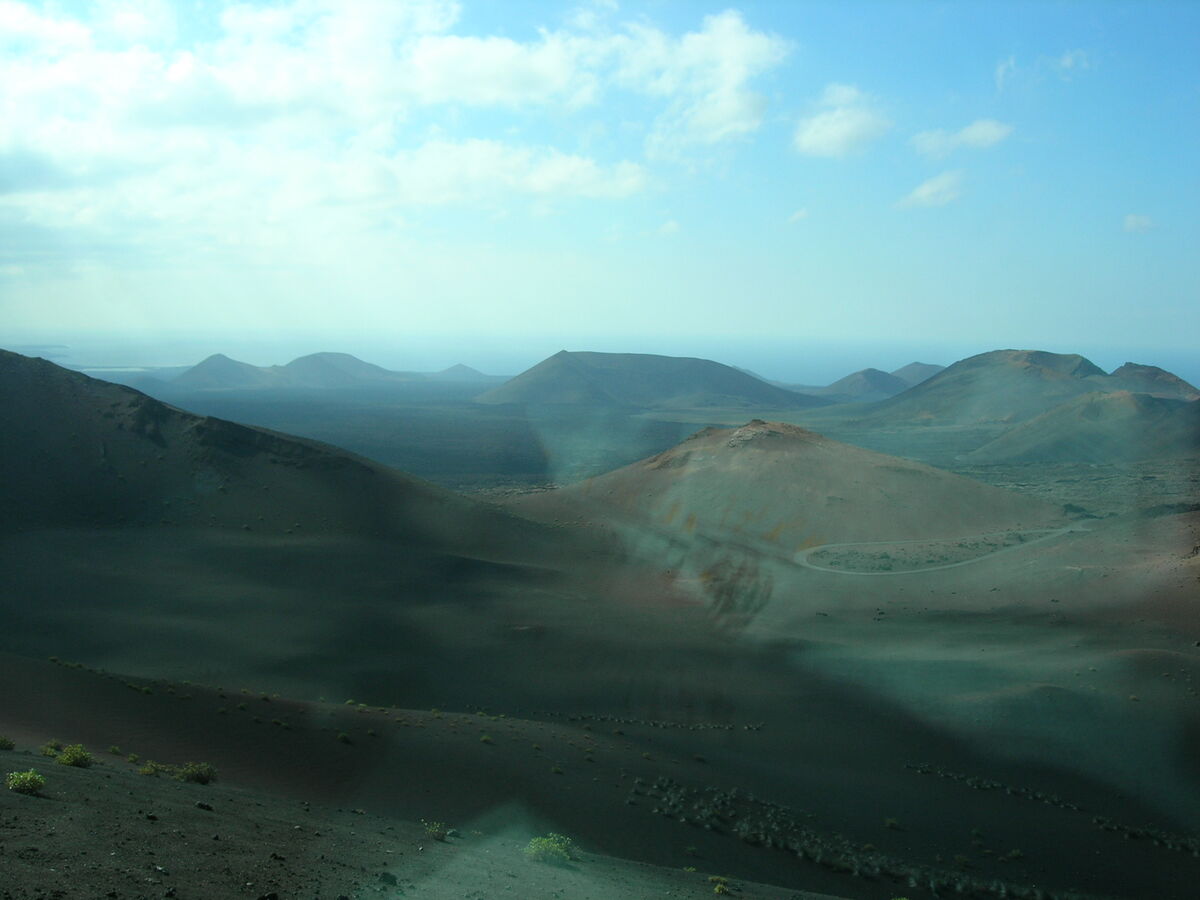
The main experience inside the park is the Volcano Route, a 14 km circular bus ride that starts and ends at Islote de Hilario. The ride takes about 35 minutes and passes through the heart of the volcanic landscape: craters, lava tubes, collapsed tunnels, and slopes of red, orange, and black rock in layers. The audio guide plays in multiple languages and explains the geology and eruption history as you go.
You cannot leave the bus or walk the route on foot. The terrain is fragile and protected. But the views from the windows are striking, especially where the road cuts between volcanic cones with nothing but lava stretching to the horizon. Sit on the right side for the best views.
Buses run continuously throughout the day. During peak hours (11:00 to 14:00), waiting times can reach an hour because of tour bus arrivals from the resorts. Arriving before 10:00 means shorter queues.
What are the geothermal demonstrations at Islote de Hilario?
Islote de Hilario is the central stop inside the park, and this is where you really feel how alive the ground still is. Park staff run three demonstrations that show the geothermal energy under the surface:
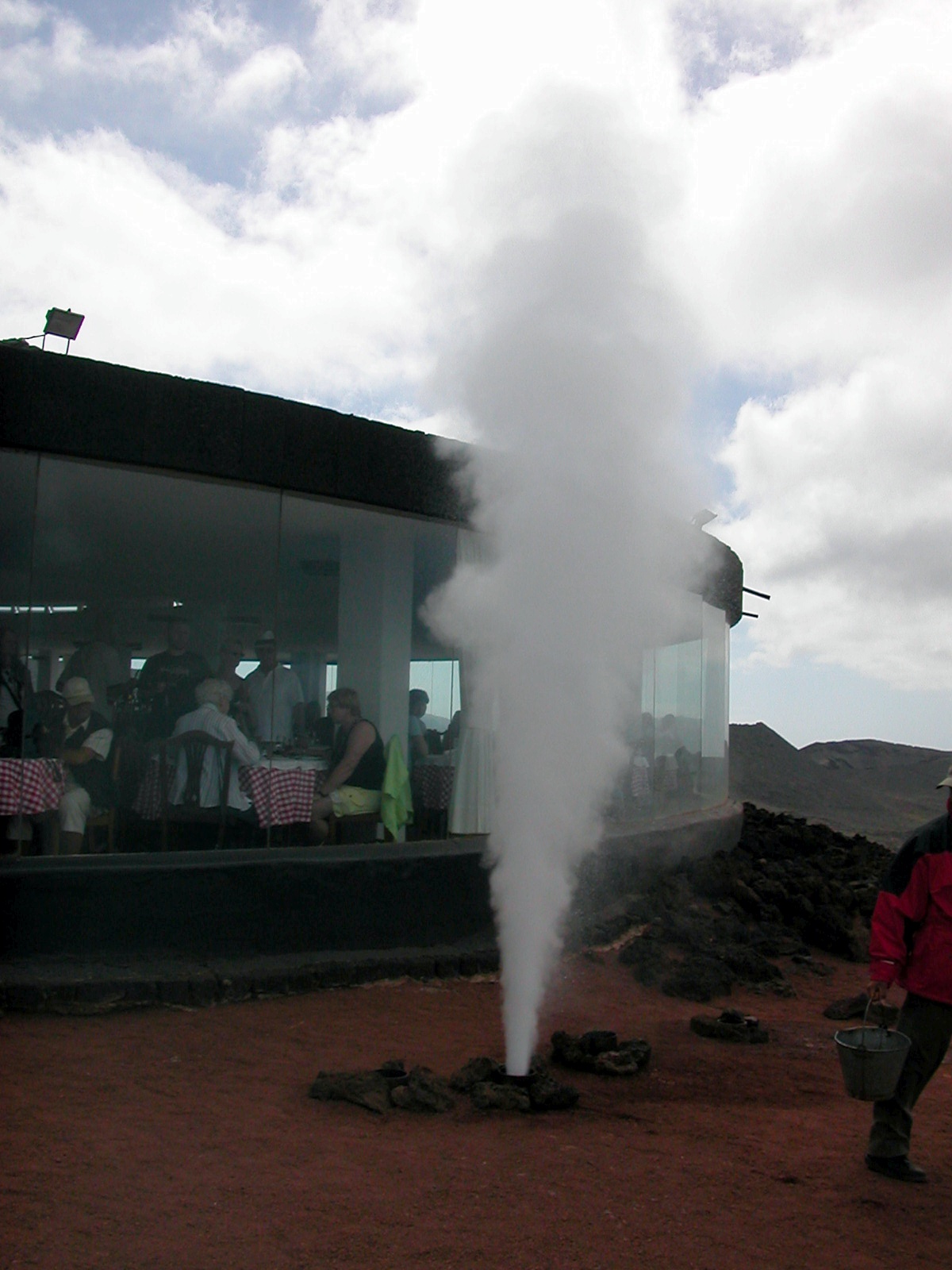
- Water geyser: A park ranger pours a bucket of water into a metal tube sunk into the ground. Within seconds, the water erupts back out as a powerful steam geyser several metres high. The underground temperature at just 2 metres depth reaches 400°C, and at 10 metres it hits 600°C.
- Spontaneous combustion: Dry branches are placed into a shallow hole in the ground. After a few seconds, they ignite on their own from the heat below. No matches, no fuel.
- Hot stones: Staff place volcanic rocks in your hands so you can feel the surface warmth directly.
These are not staged effects. The volcanic chamber beneath Timanfaya sits at a shallow depth, creating a geothermal anomaly. The heat is real and has not cooled in nearly 300 years.
Is El Diablo restaurant worth visiting?
El Diablo sits right at Islote de Hilario, inside a circular glass-walled building designed by Cesar Manrique in 1970. The main attraction is not the menu but the kitchen: a volcanic grill built directly over a natural vent in the rock. Meat and fish are cooked using geothermal heat from the earth below, with no gas or electricity involved. You can watch the chefs working over the open volcanic pit.
The food is simple Canarian cuisine: grilled chicken, pork, fish, and local potatoes. Not fine dining, but the setting is unlike any restaurant in the world. Floor-to-ceiling windows give views across the lava fields in every direction.
El Diablo is open during park hours (approximately 9:00 to 17:00). No reservations, and access requires a park ticket. Lunchtime gets busy, so eating early or late avoids the longest waits. Manrique also designed the park’s famous devil logo, a playful red figure that has become one of the most recognisable symbols of Lanzarote.
Can you ride camels at Timanfaya?
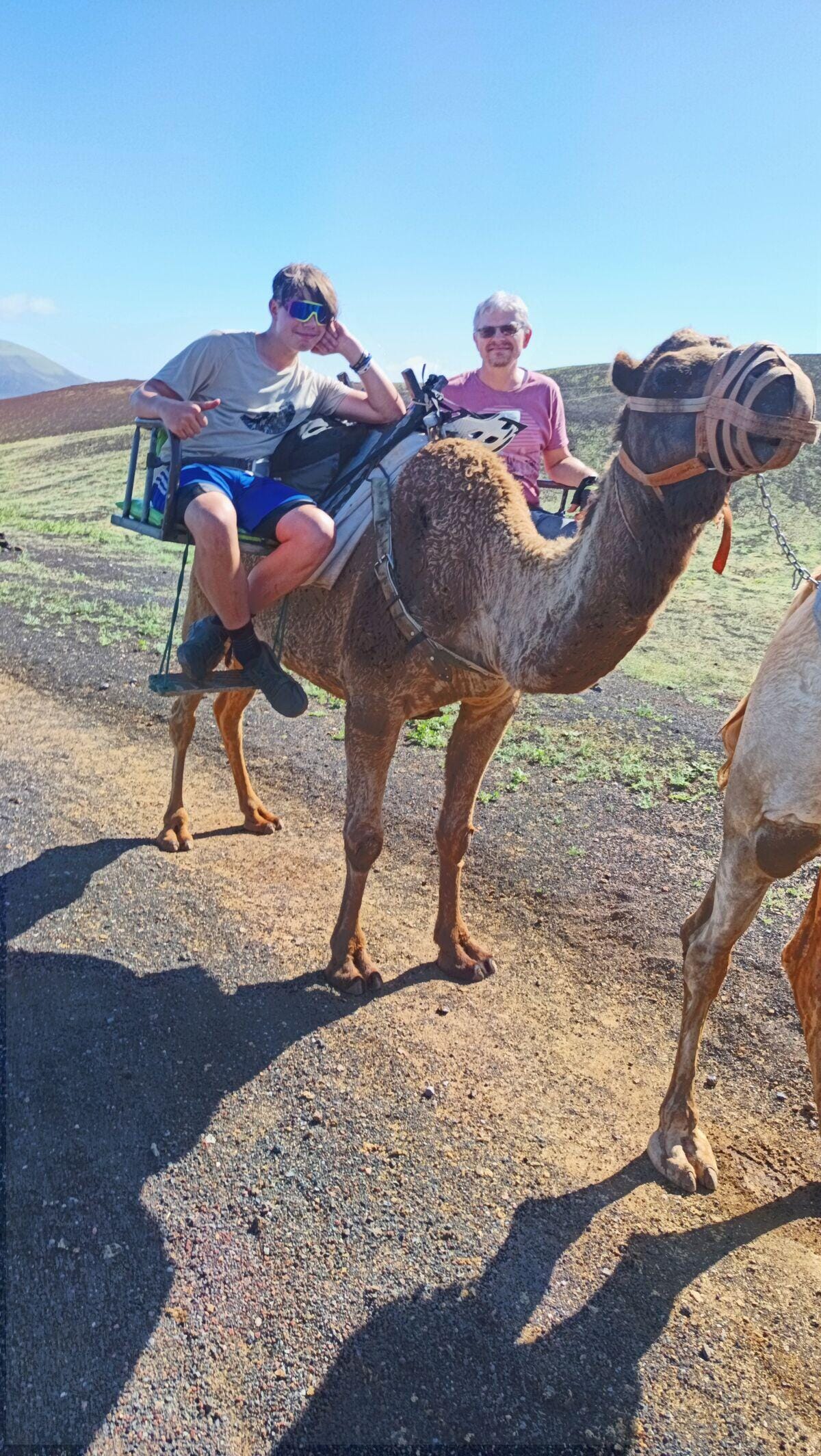
Yes. The Echadero de los Camellos is located on the LZ-67 road just south of the main park entrance. Short camel rides (about 20 to 25 minutes) take you along the slopes of the Macizo del Fuego volcano with views across the lava fields. Prices are around 12 EUR per person. The camels are actually dromedaries, single-humped, and they have been used on Lanzarote since the 15th century.
The camel station is separate from the national park, so you do not need a park ticket to ride. Queues build up by mid-morning, so going early or late in the afternoon works best.
Are there hiking trails inside Timanfaya?
You cannot hike freely inside the park, but two guided routes are available with a free permit:
Tremesana Route: A 3.5 km walk through volcanic terrain with a specialist guide. The hike takes about 3 hours including transport from the meeting point. Groups are limited to 8 people. Available every day except Thursday. Minimum age is 16. Book up to one month in advance through the official national parks reservation website (reservasparquesnacionales.es).
Coastal Route (Ruta del Litoral): A 9 km walk along the volcanic coastline where lava flows met the Atlantic. This route runs only one day per month, with bookings opening two months ahead. The meeting point is the north parking area of El Golfo village. Minimum age is 16.
Both hikes are free but require advance booking and fill up fast in peak season. If you enjoy trail running, the Famara cliffs north of Costa Teguise offer another dramatic volcanic landscape with organised races in August.
How do you get to Timanfaya from Costa Teguise?
Drive west on the LZ-2 motorway, then follow the LZ-67 south towards the park. The total journey is about 30 minutes. Parking at Islote de Hilario is included with your ticket and turns over fairly quickly. There is no public bus service to the park entrance, so you need a rental car or an organised tour.
A good day plan from Costa Teguise: leave by 09:00, arrive before 10:00, spend 2 to 3 hours inside, then continue south to La Geria to see the volcanic vineyards where Malvasia wine is produced. The Wine Run Lanzarote passes through La Geria if you visit in June. From La Geria, loop back via San Bartolome. The full circuit takes a relaxed half day.
Lanzarote Airport (ACE) is 15 minutes from Casa Los Alisios, so you can fit Timanfaya into your first or last full day on the island. The Spar supermarket is a 3-minute walk from the villa if you want to pack water and sunscreen before heading out. After a morning in the volcanic heat, the communal pool or a swim at Playa El Ancla (10 minutes on foot) is the perfect way to cool down.
What should you know before visiting?
A few practical tips:
- Buy tickets online through the CACT Lanzarote website. Walk-up tickets are available, but during peak season (December to March, Easter, summer) queues at the gate can mean waits of over an hour. Online tickets are date-specific and non-refundable.
- Arrive before 10:00 to avoid the tour bus rush. The park is quietest in the first hour after opening and in the last 90 minutes before closing.
- Bring sun protection. There is zero shade inside the park. Factor 50 sunscreen, a hat, and water are essential.
- Wear closed shoes. The volcanic rock is sharp and the ground radiates heat. Sandals are not a good idea.
- Download your QR ticket before arriving. Mobile signal inside the park is limited.
Timanfaya is the single experience that defines Lanzarote. The beaches and the sports events are all excellent, but standing on ground that is 600°C a few metres below your feet while watching water explode into steam is something you will not find anywhere else in Europe. Worth the 35-minute drive from Costa Teguise, and worth arriving early to see it without the crowds.
Frequently Asked Questions
- How much does it cost to visit Timanfaya National Park?
- Adult tickets cost around 30 EUR and children aged 7 to 12 pay 15 EUR. Children under 7 enter free. The ticket includes parking and the Volcano Route bus tour. Check the CACT Lanzarote website for current prices.
- How long do you need at Timanfaya National Park?
- Allow 2 to 3 hours for the full experience. The bus tour takes 35 minutes, and you will want time for the geothermal demonstrations, El Diablo restaurant, and the gift shop at Islote de Hilario.
- Can you walk inside Timanfaya National Park?
- Not freely. The park is only accessible by the official bus tour. However, two free guided hikes are available with a permit: the Tremesana Route (3.5 km) and the Coastal Route (9 km). Both must be booked in advance through the national parks reservation website.
- How far is Timanfaya from Costa Teguise?
- Timanfaya National Park is about 30 minutes by car from Costa Teguise, heading west via the LZ-2 and then LZ-67. There is no public bus to the park entrance, so a rental car or organised tour is needed.
- What is the best time of day to visit Timanfaya?
- Arrive early, ideally before 10:00 AM. Tour buses from the resorts arrive between 11:00 and 14:00 and create long queues at the park entrance. Early visitors get shorter wait times and a calmer experience.
Planning your trip? Book Casa Los Alisios